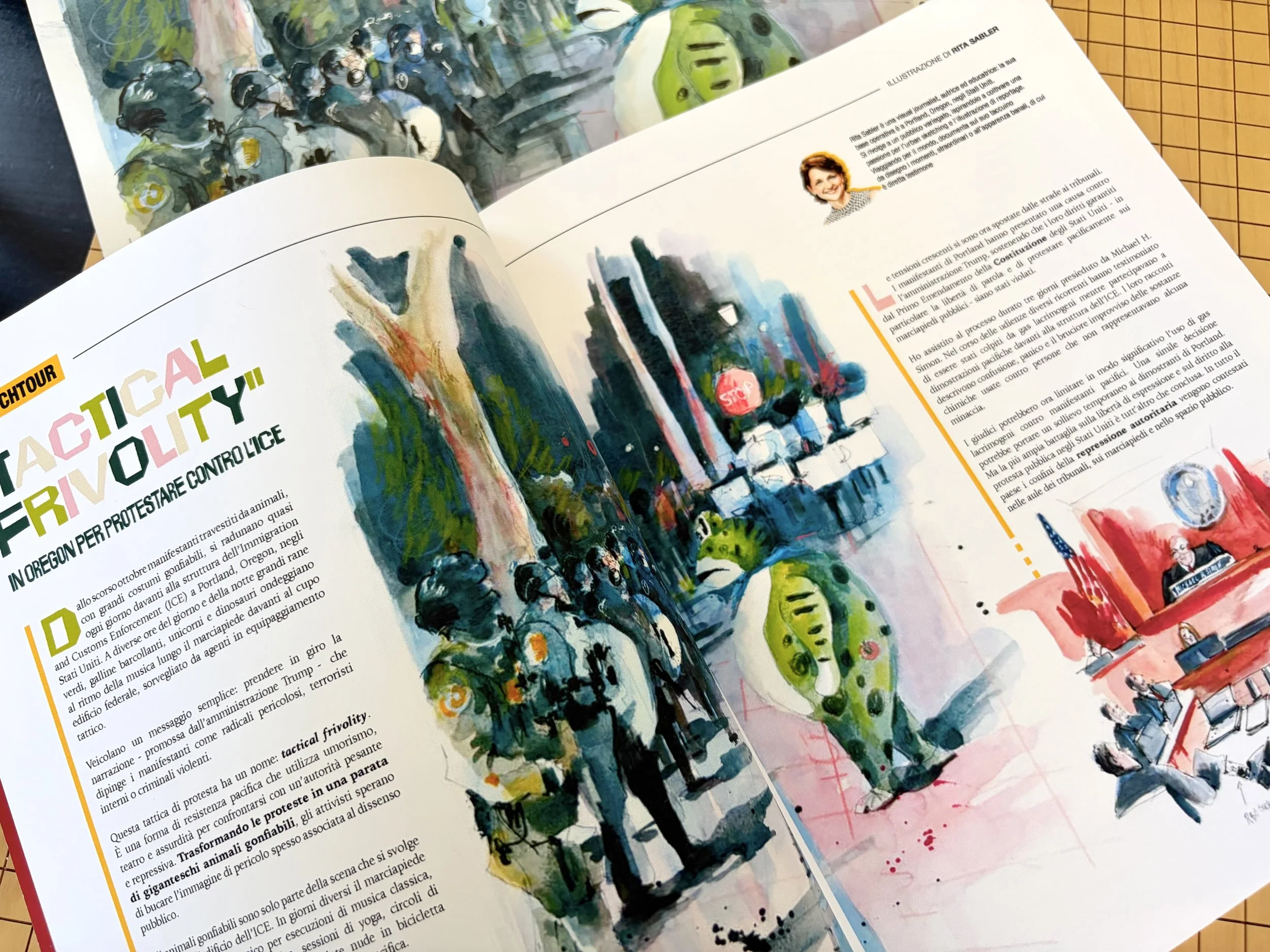
Since October of 2025 protestors dressed in inflatable animal costumes have been gathering almost every day outside the Immigration and Customs Enforcement (ICE) facility in Portland, Oregon, USA. At different hours of night and day giant green frogs, wobbling chickens, unicorns, and dinosaurs sway to the music along the sidewalk in front of the somber federal building protected by agents in tactical gear.
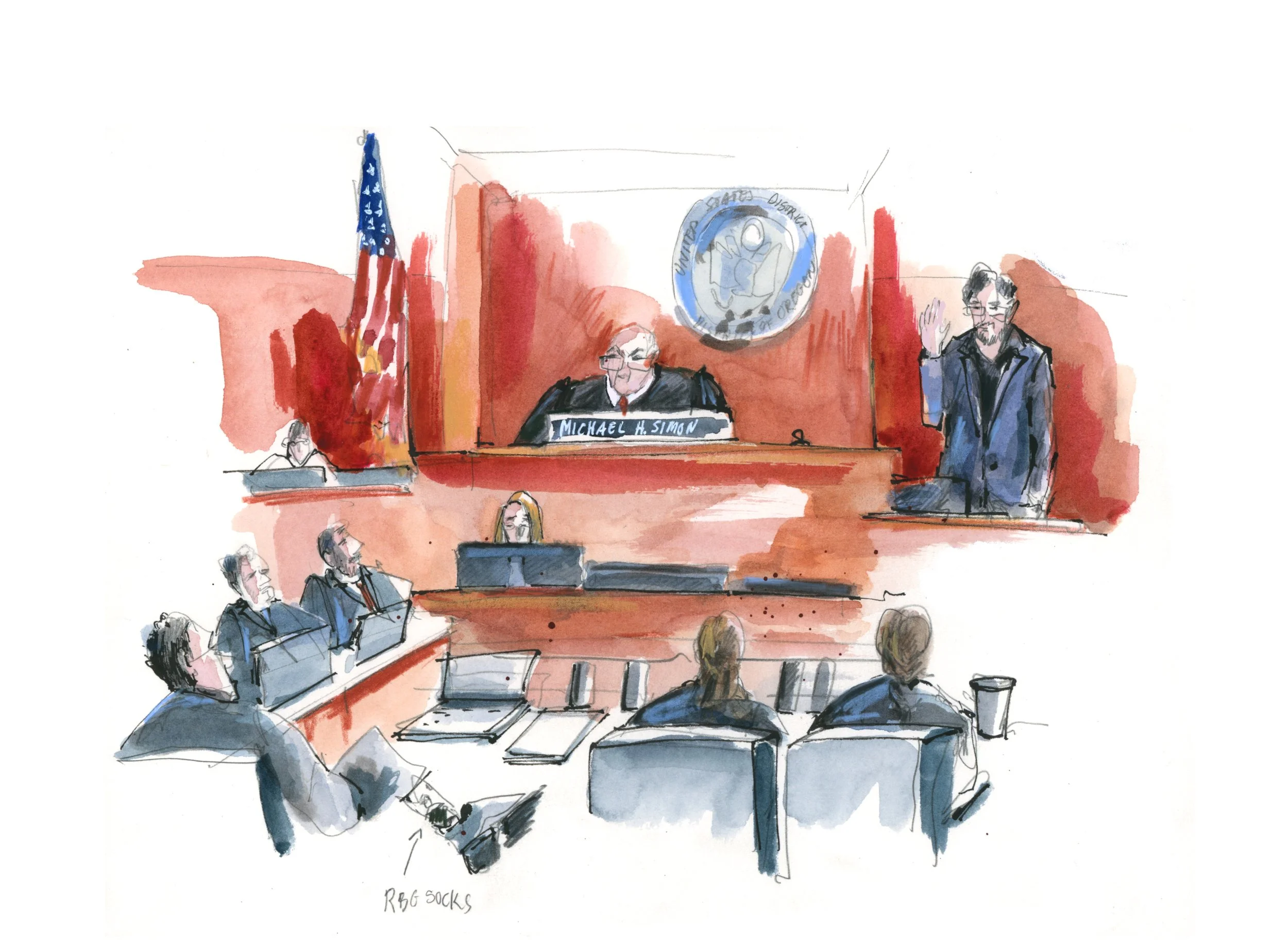
On March 4, 2026 freelance journalist Mason Lake testifies that he was repeatedly tear gassed while simply reporting near the ICE facility in Portland
Beneath the absurdity lies a simple message: making fun of the narrative—promoted by the Trump’s administration —that casts demonstrators as dangerous radicals, domestic terrorists, or violent criminals.
The protest tactic has a name: “tactical frivolity.” It is a form of peaceful resistance that deploys humor, theater, and absurdity to confront heavy-handed authority. By turning protests into a parade of giant inflatable animals activists hope to puncture the image of danger often attached to public dissent.
The inflatable animals are only one part of the scene unfolding outside the ICE building. On different days the sidewalk becomes a stage for classical music performances, impromptu salsa lessons, yoga sessions, knitting circles, and even the occasional naked bike ride—alongside more traditional forms of peaceful protest.
The federal response has been marked by humorless crowd-control tactics. Agents in black ballistic helmets, body armor, and face coverings frequently confront the gatherings with tear gas, pepper balls, and flash-bang grenades. In several instances, entire crowds—including the elderly and children—have been swept up in clouds of chemical irritants as authorities attempt to clear the area surrounding the federal facility.
The escalating confrontations have now moved from the streets to the courts. Protesters in Portland have filed a lawsuit against the Trump administration, arguing that their rights under the First Amendment to the United States Constitution—particularly the freedom of speech and to protest peacefully on public sidewalks—have been violated.
I attended the three-day trial presided over by Michael H. Simon. Over the course of the hearings, several plaintiffs testified that they were tear-gassed while participating in peaceful demonstrations outside the ICE facility. Their accounts described confusion, panic, and the sudden sting of chemicals used on the people that posed no threat.
A ruling from Judge Simon is expected on March 9, 2026 and it could significantly restrict the use of tear gas against peaceful protesters. Such a decision might bring temporary relief to demonstrators in Portland. But the broader struggle over free speech and public protest in the United States is far from settled. Across the country, the boundaries of authoritarian suppression are being contested in courtrooms, on sidewalks, and in the public square.
Written and illustrated for Grand Tour Magazine
March 2026
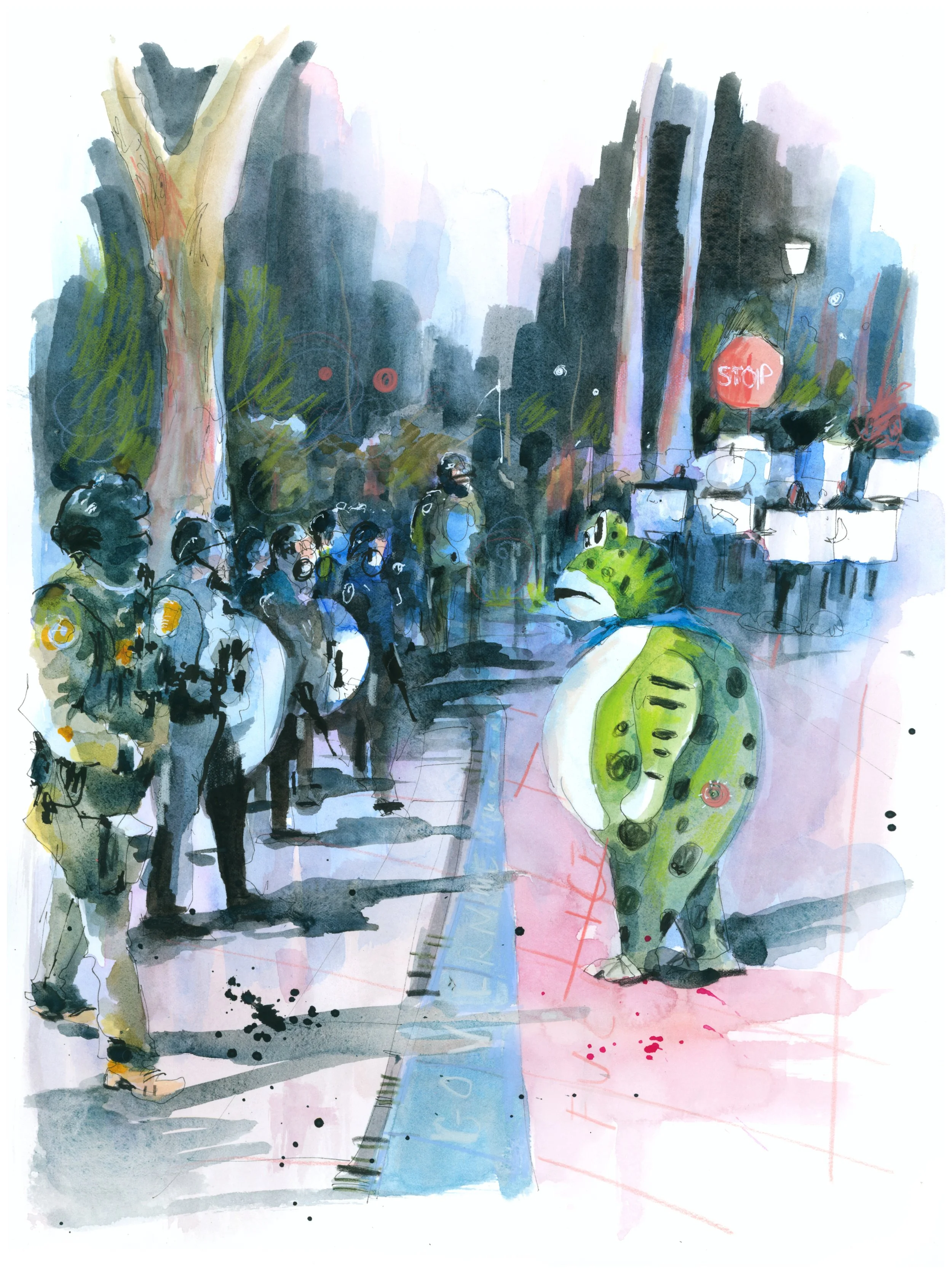
Protesters in inflatable costumes use "tactical frivolity" to combat federal agents.